The Mel Robbins Podcast
10 episodes — every digest for The Mel Robbins Podcast.
In this episode, mentalist O Pearlman teaches conversational skills and confidence techniques drawn from his 30 years of experience, framing mentalism as the art of understanding and influencing how people think rather than possessing psychic powers. He demonstrates the "Let Them Theory" by correctly guessing a word from Mel Robbins’ book, and shares a verified story about performing at an event where President Barack Obama was speaking, using a prepared, unexpected line ("Thank you for the gift") to create a memorable exchange. Key communication strategies include avoiding yes/no questions to keep conversations open, matching energy to build rapport, ending interactions at their peak to leave people wanting more, and using silence effectively. To overcome rejection, Pearlman advocates a "split personality" technique that separates his professional identity from his personal self, and reframes rejection as a numbers game—quantifying that giving out 60 business cards yields only 1–2 calls, so each "no" brings him closer to a "yes." He also introduces a "fast-forward feelings" method for dread: setting a 24-hour alarm for a dreaded task, doing it immediately using the five-second rule, and then realizing the anticipated anxiety has dissipated. The host contributes the "Listen, Repeat, Reply" shampoo method for remembering names, and emphasizes that making people feel seen and heard through note-taking and personal details is a key driver of long-term success.
In this episode, Mel shares her son Oakley’s 18-month struggle with unhappiness in college, which suddenly lifted when he changed his mindset rather than his circumstances. She presents four key takeaways for distinguishing whether unhappiness stems from the situation or from oneself. The first is that comparison triggers judgment, isolation, and an inflated fantasy of the past, preventing you from seeing the good in your current situation. The second is that holding tightly to the past blocks new opportunities—you cannot fully open a new door while gripping the old one. The third is that believing your best days are behind you is a trap that reinforces misery. The fourth is that if you change nothing, nothing changes. Mel emphasizes the importance of giving new situations a fair chance, adopting an expansive mindset, and actively saying “yes” to social opportunities. She cites research by Tina Seelig showing that “lucky” people intentionally put themselves in the current of what they want, taking small actions to increase collisions with opportunity. The episode also explores the idea that life is for the experience, not just the pursuit of happiness, and that at any moment you have the agency to change how you show up. If you’ve changed but the situation hasn’t, it may be time to change the situation rather than yourself. The episode underscores the danger of staying in a bad situation without acting, and the power of proactive, small shifts in behavior to create a happier version of yourself.
In this episode, a neuroscientist explains that dreaming is not a passive or accidental state but an essential, highly active brain process where blood flow and electrical activity remain intense. The brain's executive network is dampened while the imagination and limbic systems become more active, offering a unique portal to combine memory, emotion, and imagination. Practical techniques are shared for improving dream recall, such as slow arousal upon waking and using the power of suggestion before sleep. Lucid dreaming—waking up within a dream—is scientifically validated through lab studies using eye movements and brain signatures, and can be cultivated with a step-by-step method involving a timed alarm and intention-setting. Dreams can be given assignments to solve problems or gain insights, and the last few minutes before sleep can influence dream content. Nightmares are redefined as terrifying dreams that must wake the sleeper, and they can serve as early warning signals for mental health issues even when someone appears to be coping well. The episode emphasizes that dreams are a free, accessible wellness tool for emotional balance, self-understanding, and even rehearsal for athletes, while sleep itself is framed as a safe space for exploration and mental reset.

The episode emphasizes that longevity is primarily determined by lifestyle, not genetics, with only 20-25% of lifespan attributed to heredity. A Harvard study found that adopting five healthy behaviors—a nutritious diet, not smoking, 3.5 hours of weekly moderate-to-vigorous exercise, limited alcohol, and a healthy BMI—starting at age 50 can add 12-14 years to life expectancy. The core message is that focusing on a few key habits (movement, diet, sleep) is more effective than pursuing numerous health hacks. Vigorous exercise is highlighted as particularly impactful: intensity matters more than duration, as short bursts of breathless activity (exercise snacks) create shear stress on arteries, improving endothelial function and flexibility. Sleep is critical for DNA repair and recovery, while chronic sleep deprivation can lead to visceral fat gain even with exercise. The discussion also clarifies that the 10,000-step goal originated from a 1960s marketing campaign, and that one minute of vigorous exercise may provide benefits equivalent to much longer periods of light activity, though the exact ratio requires further research. Overall, the episode presents a science-backed, streamlined approach to improving mood, metabolism, inflammation, and aging.

In this episode, Mel Robbins speaks with Priya Parker, author of *The Art of Gathering*, about how to design more meaningful and exciting connections. Parker defines a gathering as three or more people coming together with a clear beginning, middle, and end for a specific purpose. She argues that a good purpose must be specific, unique, and disputable, as over-inclusion dilutes the experience. Robbins applies this by hosting small, themed groups for her 30th anniversary instead of a large party. A central theme is the distinction between unhealthy peace—avoiding important topics to preserve harmony—and healthy conflict, which is necessary for genuine connection. Parker emphasizes that conflict signals caring, and that healthy communities require "healthy heat." Practical advice includes using the first five percent of a gathering to set the tone, such as having a greeting committee for in-person events or using playful rules on Zoom (e.g., asking people to sing a Neil Diamond song to turn off their camera). She also recommends rotating a "magical question" among participants to build psychological community. Simple actions like going for a walk or playing badminton can transform connections, and guests themselves hold significant power in shaping the experience. The episode reframes gathering not as a chore but as a creative act of building a temporary world.
In this episode, relationship researchers John and Julie Gottman share evidence-based insights from decades of study, emphasizing that the first three minutes of a conflict conversation can predict divorce or marital happiness with nearly 90% accuracy. They identify the "Four Horsemen of the Apocalypse"—criticism, contempt, defensiveness, and stonewalling—as destructive communication patterns that, when present, strongly forecast relationship failure. Verified claims show that couples who divorced six years later had only a 33% average rate of turning toward their partner's bids for connection, compared to 86% for still-married couples, and that only 22% of people will rebid after being turned away. The hosts demonstrate how to shift from blame and character attacks to gentle start-ups and vulnerable conversations, such as addressing loss of attraction collaboratively. They also highlight the importance of small, consistent rituals of connection—like a weekly "State of the Union" meeting that begins and ends with gratitude—and advise partners to postpone problem-solving and instead listen with a notebook to fully understand each other's feelings and needs. The overarching theme is that friendship, play, and emotional attunement are more critical to relationship success than conflict resolution alone.
In this episode, Mel Robbins introduces seven custom-designed nightly affirmations to combat the common experience of lying in bed and being flooded with worries, regrets, and to-do lists. The affirmations include acknowledging it's okay to feel overwhelmed, telling yourself you can manage problems without solving them immediately, recognizing you did your best and now it's time to rest, setting a positive expectation for the next day, and giving yourself explicit permission to drift off to sleep. Mel explains the psychological backing for these phrases, citing research from Dr. Alia Crum on acknowledging your current state and Dr. Lisa Damour's insight that distress—such as anxiety before a test or heartbreak—can actually be evidence of mental health, not pathology. She also references Dr. Daniel Amen, who starts each day saying "Today is going to be a good day," which Mel adapted for nighttime use. The episode emphasizes that improving sleep even slightly (e.g., from five to five and a half hours) yields more physiological benefit than perfecting diet or exercise. A key technique to stop rumination is to "put a pin in it" and schedule a time to address the worry later, allowing the brain to take a mental vacation. The overarching theme is that worrying prevents sleep by signaling to the brain that it doesn't have permission to rest, and these affirmations are designed to release that need to worry and allow the body to naturally fall asleep.

This episode focuses on career design and success in a rapidly changing work environment, with Carla Harris and Mel Robbins offering practical strategies. A central theme is that all professional rules are being rewritten, making this an ideal time to intentionally design a career rather than follow a prescribed path. Harris introduces a three-sheet exercise to help individuals identify what they genuinely enjoy, the people they prefer to work with, and the ideal content of a job, emphasizing that focusing on job content rather than title opens up more opportunities. The discussion also addresses psychological barriers, particularly for women, identifying fear and fatigue as primary obstacles. Harris reframes fear as "false evidence of things appearing real" and notes that the glass ceiling is often a self-imposed mental barrier. The episode also covers the strategic use of AI to save time, reduce burnout, and provide self-feedback, with a warning that avoiding AI risks being left behind. Other key insights include the importance of building sponsor relationships through consistent, light-touch interactions, the value of directly asking for sponsorship, and the reframing of career reinvention as an evolution where past experiences inform the future. Failure is presented as a gift that provides valuable experience, and stay-at-home parenting is reframed as developing resourcefulness and leadership skills that build confidence.
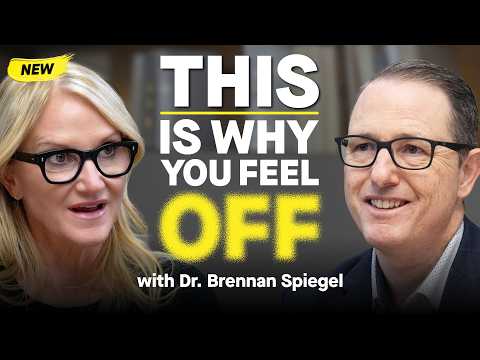
In this episode, Dr. Spiegel presents the concept that many common health issues—including exhaustion, back pain, anxiety, depression, dizziness, and swollen ankles—may be forms of "gravity intolerance," where the body struggles to resist the downward pull of gravity. He links physical symptoms like low back pain and chronic fatigue to emotional states such as feeling mentally down or anxious, and suggests that joint stretchiness (e.g., a bendy pinky or thumb touching the forearm) may indicate internal stretchiness connected to GI problems like IBS. A key verified claim is that the ability to stand on one leg for at least 10 seconds is tied to survival and life expectancy, especially in older individuals. Dr. Spiegel recommends practical interventions to strengthen the body's relationship with gravity, including wearing a weighted vest (he wears a 12-pound vest most of the day) and 20-pound ankle weights for passive exercise, as well as performing dead hangs from a pull-up bar, which can instantly add about half an inch of spinal height. He also reframes gravity as upward acceleration to encourage a mindset shift that improves posture and breathing. Overall, the episode integrates physical, psychological, and philosophical themes, arguing that pain, weight, and digestive issues are interconnected as the body fights and harmonizes with gravity.

In this episode, Mel Robbins introduces two simple but powerful reset questions—what you're proud of so far this year and what you're looking forward to—as tools to shift perspective, build momentum, and combat the autopilot of daily life. She shares personal stories from a three-month tour across four countries, performing for nearly 100,000 people, and highlights a moving moment when a woman named Colleen shared her birthday wish to beat cancer, prompting an eruption of support from the crowd. Robbins emphasizes the neuroscience of anticipation, citing Dr. Tali Sharot’s research on why having something to look forward to is essential for well-being. She also recounts a personal story about climbing Mount Katahdin with stiff, new boots and choosing a positive mindset, which she credits for a blister-free hike—though the direct causal link between mindset and physical outcomes is partial. The episode reinforces the verified claim that if you change nothing, nothing changes, encouraging listeners to celebrate wins, reclaim lost passions, and intentionally create future goals, no matter their current circumstances.